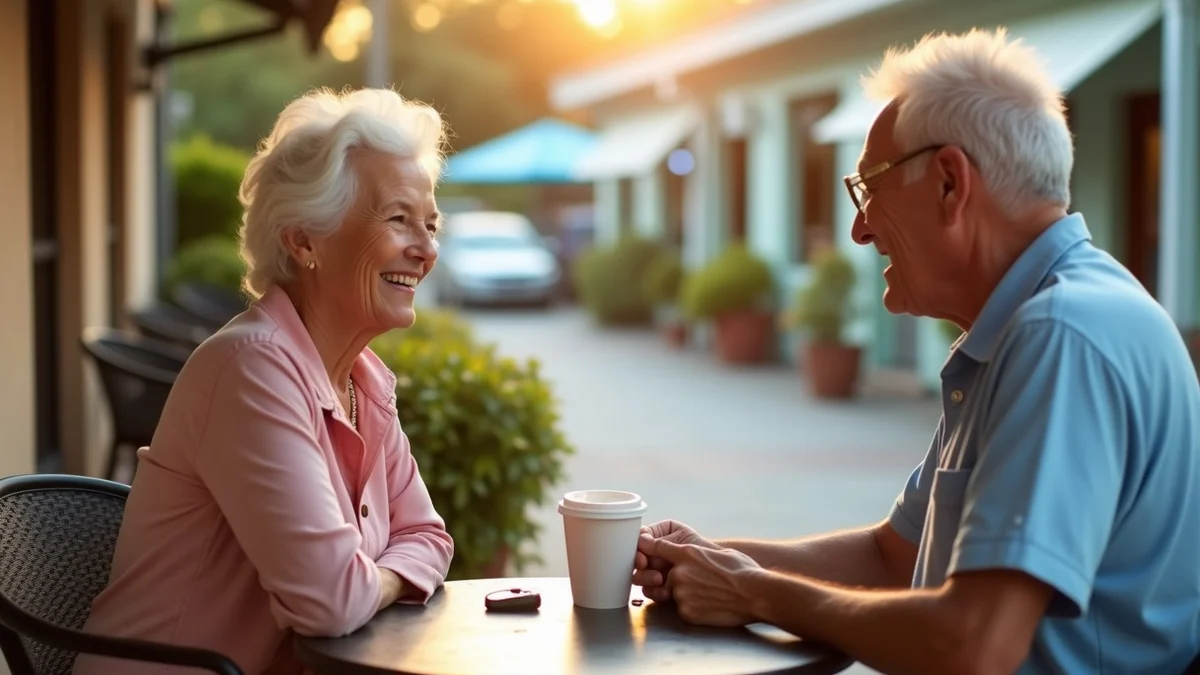
Florida’s long shape can turn an appealing match into a substantial travel commitment faster than many people expect. For singles over 50 dating in Florida, a realistic search radius, an early conversation about seasonal residence, and a meeting rhythm that fits ordinary weeks matter more than a large list of matches. Treat those details as part of compatibility from the beginning.
Published by Open Connection
When one person lives in Florida only part of the year

Seasonal residence changes the terms of a new connection. Two people may live near each other through winter, then face months in separate states once one returns to a northern home. Arrival and departure dates belong in profile details or early conversations because they shape how often you can meet, whether exclusivity feels realistic, and what happens after the season ends.
Before a relationship becomes exclusive, cover contact while one person is away, visit expectations, and whether either person sees Florida as a future year-round base. Someone returning each November offers a very different relationship calendar from someone who is leaving after a short stay with no plan to return. A warm season together can carry forward, but only when both people recognize the calendar in front of them.
Florida dating regions and realistic travel radiuses
Florida is not one dating region. South Florida, the Tampa Bay area, Central Florida, Northeast Florida, and the Panhandle each contain their own clusters of cities and suburbs. A map may show a modest number of miles while the route requires crowded highways, bridge crossings, or a long drive through a metro area. A match across Palm Beach and Broward counties, or across Tampa Bay, deserves a travel-time check before either person assumes the distance is easy.
Set your search radius by the time you will actually travel for dinner on a weekday or a relaxed daytime date on a weekend. Check the route at the hour you would normally leave. Then decide how often you expect to meet during the first months. A relationship built around two meetings a week calls for a tighter radius than one where both people are content to meet every other weekend.
Treating the whole state as a local pool is a poor plan unless travel is already part of your life. For a promising match beyond your normal range, agree on who travels, where you meet, and how the arrangement will look after the first few dates. Geography becomes less irritating when neither person is quietly carrying all of it.
Clear intentions reduce mismatches after 50
After 50, serious relationship can describe very different futures. Companionship may mean shared outings and regular affection. A long-term partnership may include separate homes, frequent travel, or a shared household. Remarriage may be welcome, off the table, or still undecided. Those are not minor distinctions when a Florida match already involves distance or a seasonal move.
Put the direction of your dating life into plain terms early: companionship, a committed partner, openness to remarriage, preference for separate homes, possible cohabitation, and the pace you prefer. No one needs to settle housing plans on a first date. Leaving these subjects vague, though, can consume months with someone whose future picture does not include yours.
Which online and offline channels fit your social routine?

Dating apps suit people who can set aside regular time for profiles, messages, and dates, especially when their search needs to stay within a defined Florida area. Put your home base, seasonal residence, and practical travel range near the front of your profile. That filters out distant conversations that have no plausible path to an in-person date.
Activity groups, classes, volunteer programs, and community events serve a different purpose: they put people in the same place on a recurring schedule. A weekly class or volunteer shift fits someone who prefers a familiar setting and short trips. Community events suit people with more open calendars but less interest in prolonged online messaging. Choose channels that match the time and energy you can repeat each week; scattered efforts across too many places usually produce a thin calendar.
Retirement flexibility and working-life structure
Do not assume that age means retirement. One person may be free for weekday lunches, morning walks, and short-notice plans while another has a full-time job, a part-time business, caregiving duties, or a fixed volunteer commitment. The friction is not a lack of interest. It is a calendar with few shared openings.
A retired person and a working person can still create a steady rhythm by choosing overlapping hours: one weekday evening, a weekend afternoon, or a regular breakfast before work. Two retired people may have wider daytime availability, yet travel, family visits, and seasonal residence can fragment that freedom. Discuss the times you are reliably available before making assumptions from a blank calendar. The right pace is the one both people can maintain without repeated rescheduling.
Signs distance is becoming harder to sustain
Distance becomes a relationship issue when logistics repeatedly erase time together. Frequent cancellations tied to the drive, one person handling nearly every trip, long gaps between meetings despite a wish for regular contact, and an unresolved question about future home bases all point to an arrangement under strain.
At that point, revise the radius, the meeting location, or the schedule. A relationship cannot run indefinitely on promises to travel more later. When relocation is part of the future picture, the subject needs a real timeline and two willing participants. When it is not, the connection needs enough in-person time to stand on its own.
Florida can support a lasting relationship after 50, but geography and calendar details set the terms early. A profile radius that reflects a real Tuesday evening, a clear seasonal timetable, and candid talk about homes and commitment screen out arrangements that live only in theory. Time together has to fit ordinary weeks, not just holiday weekends.